
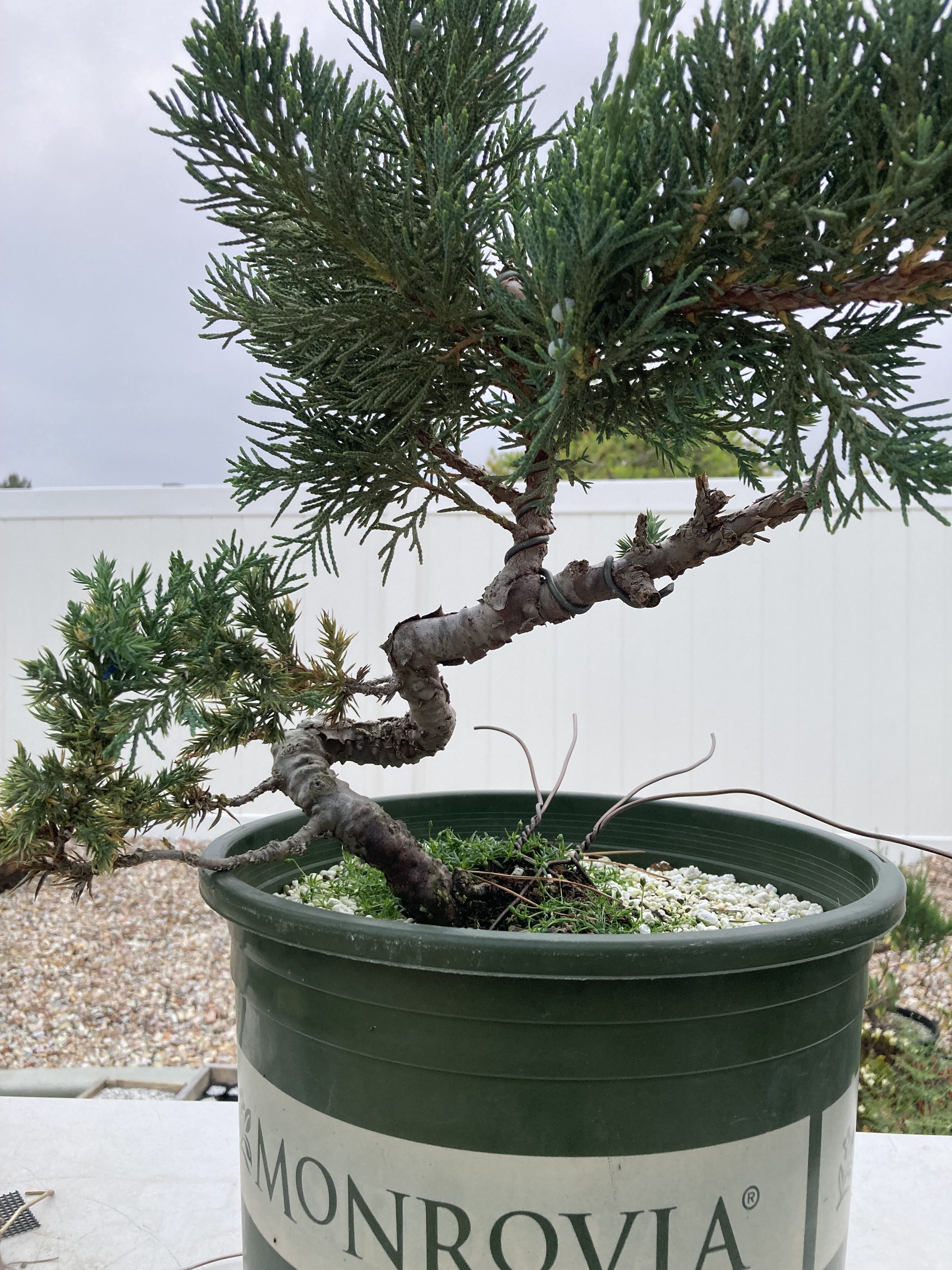
Wiring is one of the most useful tools in bonsai, giving you control over branch placement that pruning alone can’t achieve. But the job isn’t done once the wire is on. The tree keeps growing and if you don’t remove wire at the right moment, you trade a useful technique for a scarred branch. Knowing when to take wire off is a skill every practitioner needs to develop early.
Why Timing Matters
Wire is typically applied during the dormant season, when growth has slowed and branches are flexible. As the tree comes out of dormancy and begins pushing new growth, the branches gradually thicken and lock into whatever position the wire holds. That’s the goal. If wire is left on past that point it starts to create a problem.
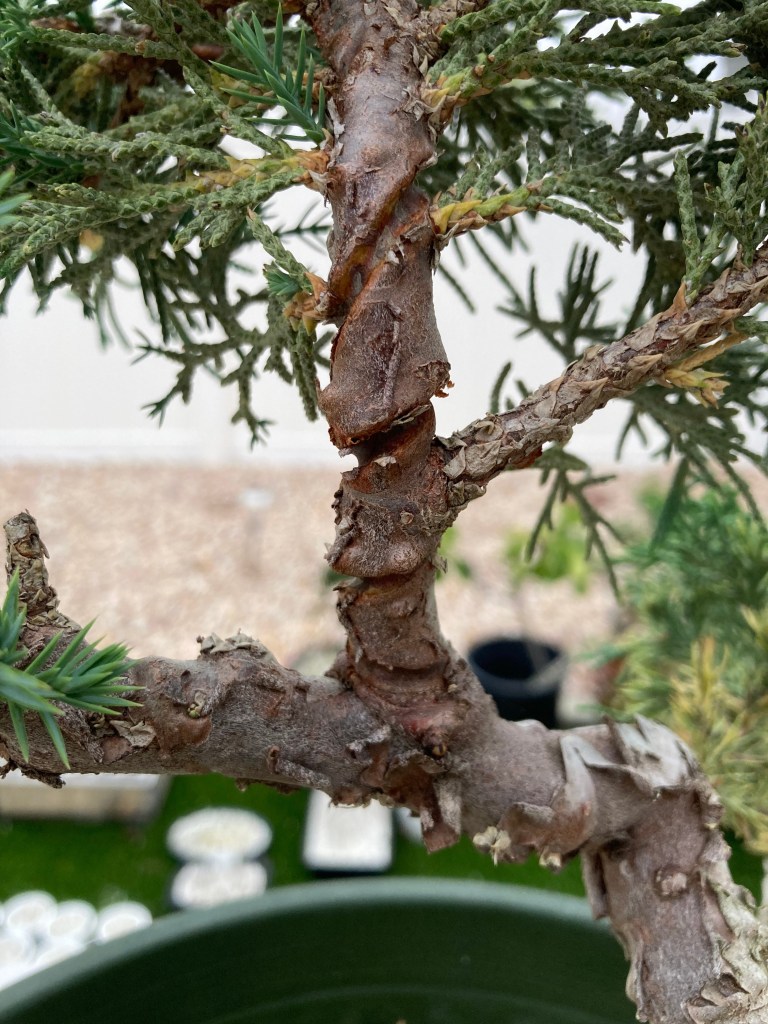
A growing tree doesn’t pause because there’s wire around it. Bark and wood expand outward, and if the wire is still in place, the bark begins to grow around it. The result is a spiral pattern pressed into the bark that mirrors the angle of the wire. For most species, these marks are unattractive and can be difficult to reverse.
How to Spot Wire That’s Biting In
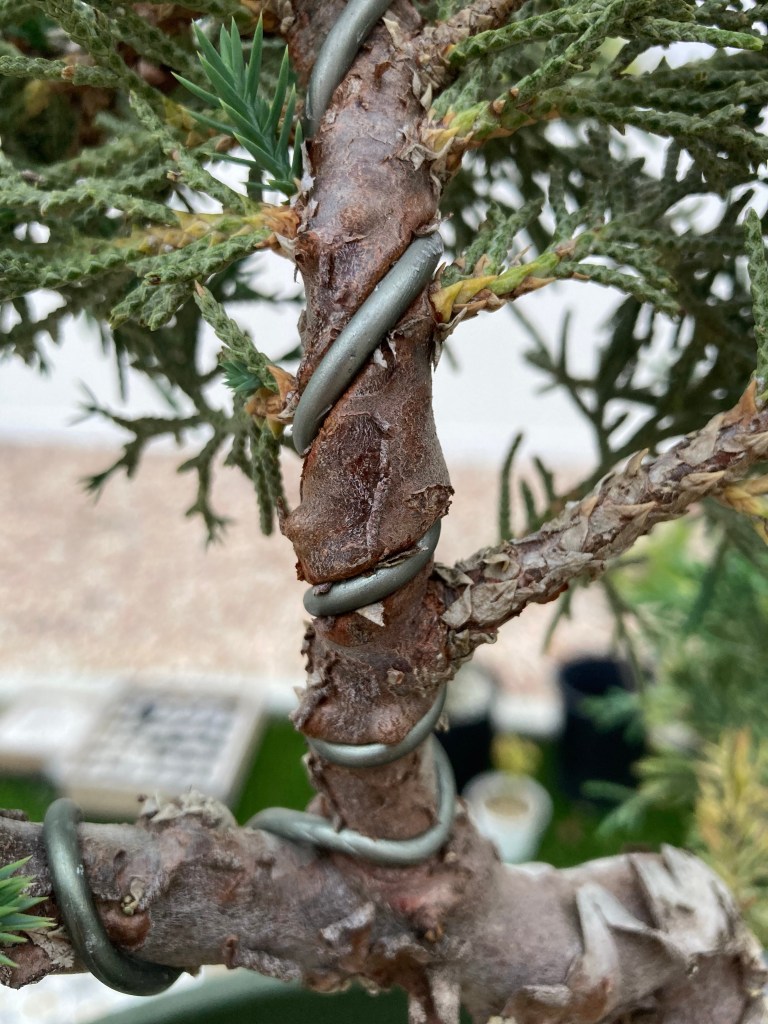
During the growing season, check your wired trees every two weeks. What you’re watching for is wire that has shifted from sitting on the surface to beginning to sink into it. Early signs include the bark bulging slightly on either side of the wire, or the wire appearing to press down into the surface rather than rest on top of it.

At the first sign of this, remove the wire immediately. Caught early, the small indentation will typically smooth out over the course of a growing season. The longer you wait past this point, the deeper the marks will be. Trees in active spring growth can engulf wire faster than you’d expect — what looks fine one week can be noticeably embedded two weeks later.
How to Remove Wire Safely
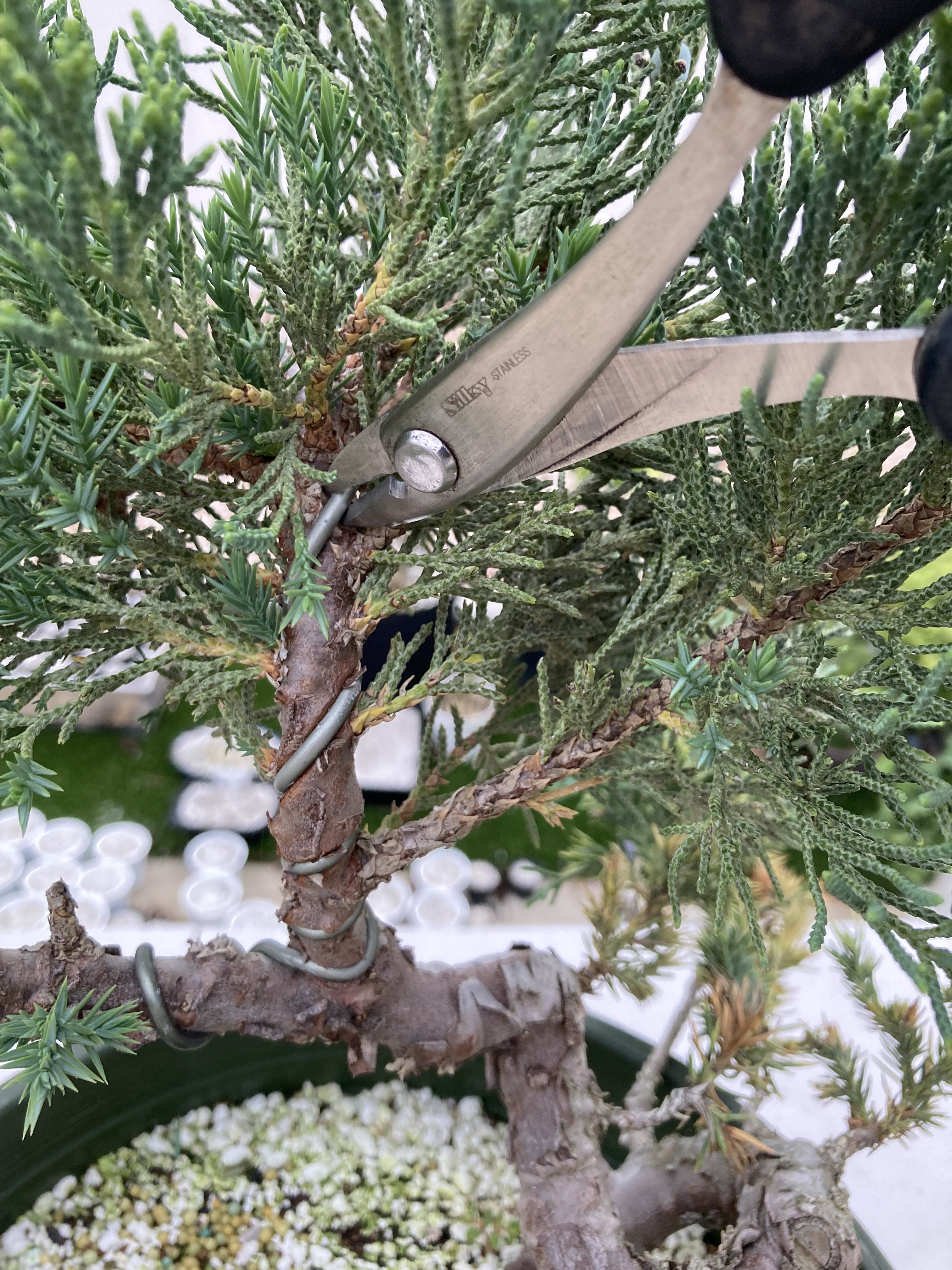
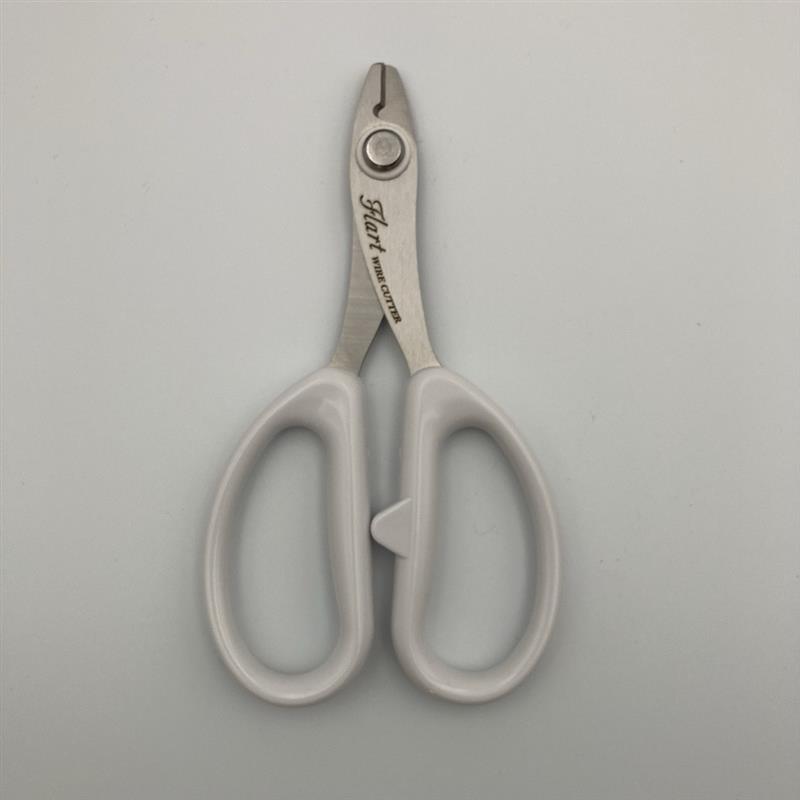
The right technique for wire removal is to cut it off, never to unwind it. Unwinding wire from a branch that has set, even partially, risks snapping the branch as you apply torsion against the grain it’s taken. Use a bonsai wire cutter to cut the wire into short sections — roughly every turn — then lift each piece away separately. A proper bonsai wire cutter has a rounded jaw that lets you cut close to the bark without gouging it. Cut every section working from the tip of the branch back toward the trunk.
When You’ve Left It On Too Long
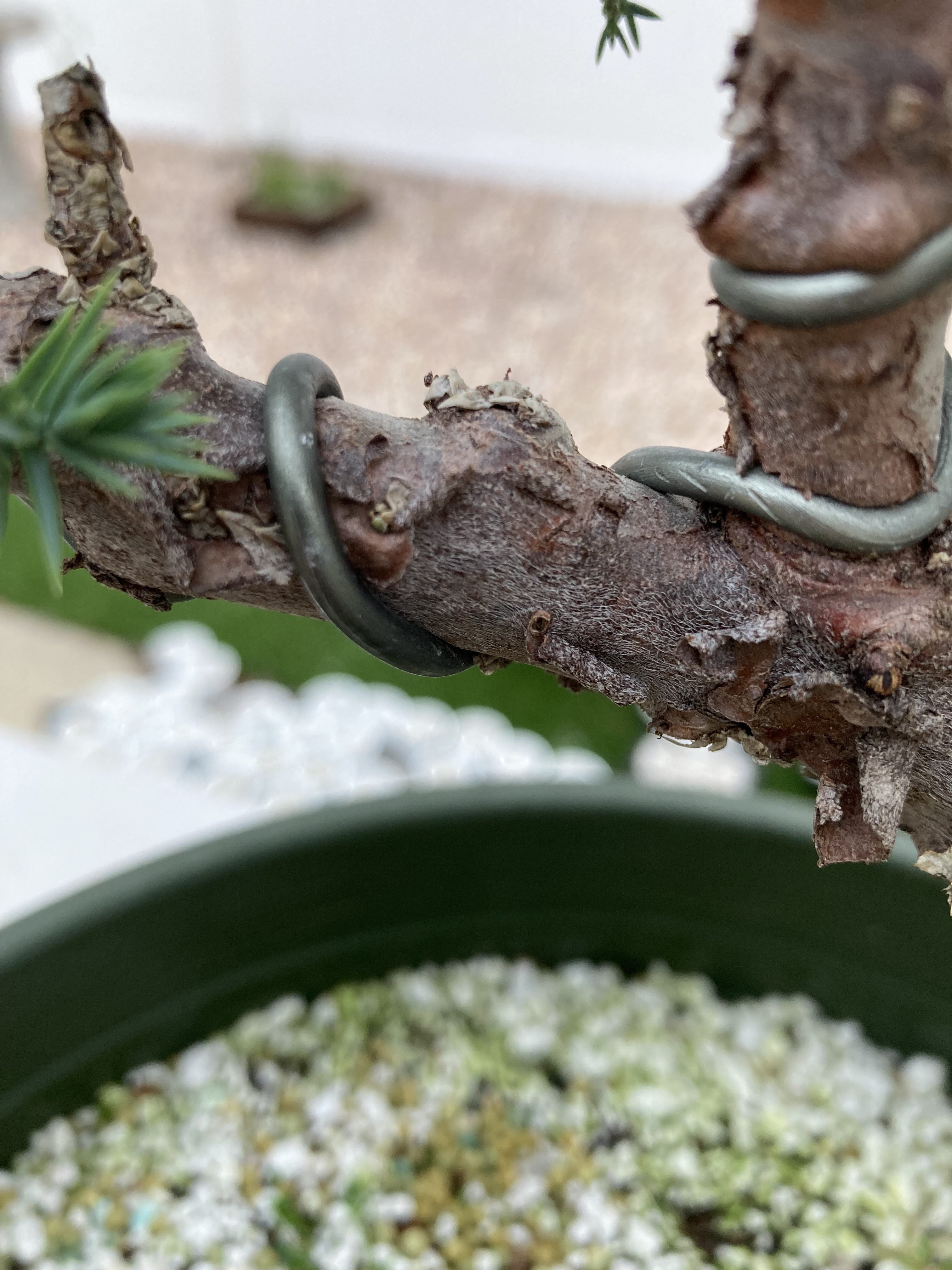
If the wire has started to sink into the bark, you need to be more careful lifting each section out. After cutting where you can, use wire pliers to grip each piece and pull it free. For sections that have been partially engulfed, the direction you pull matters.
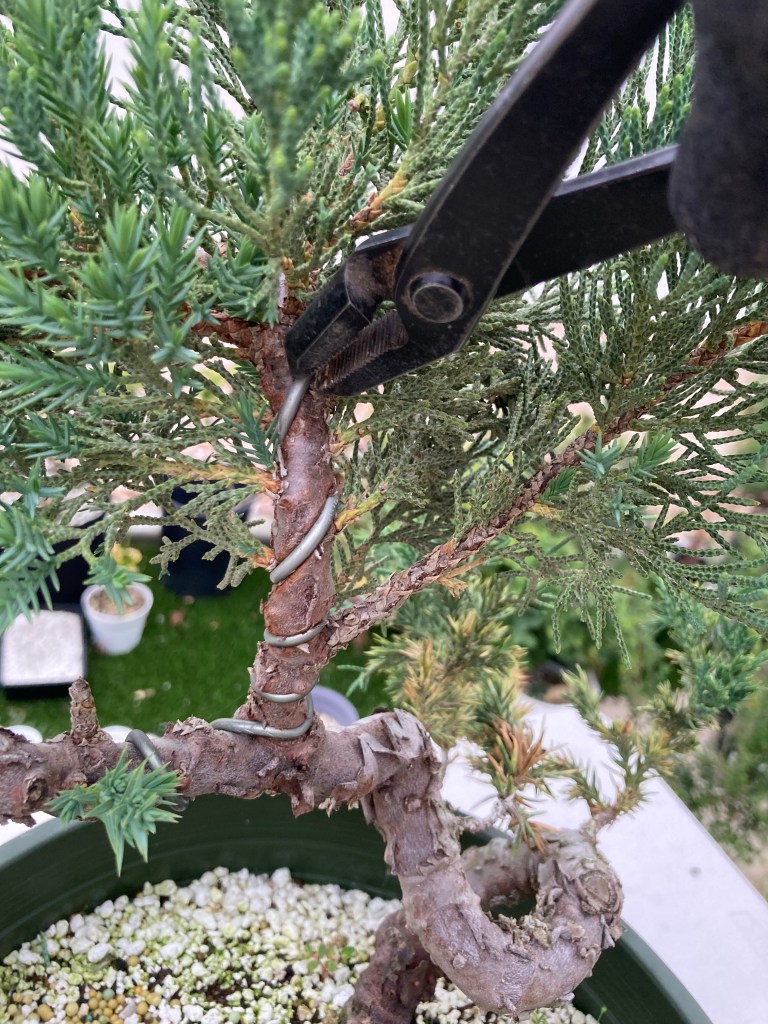

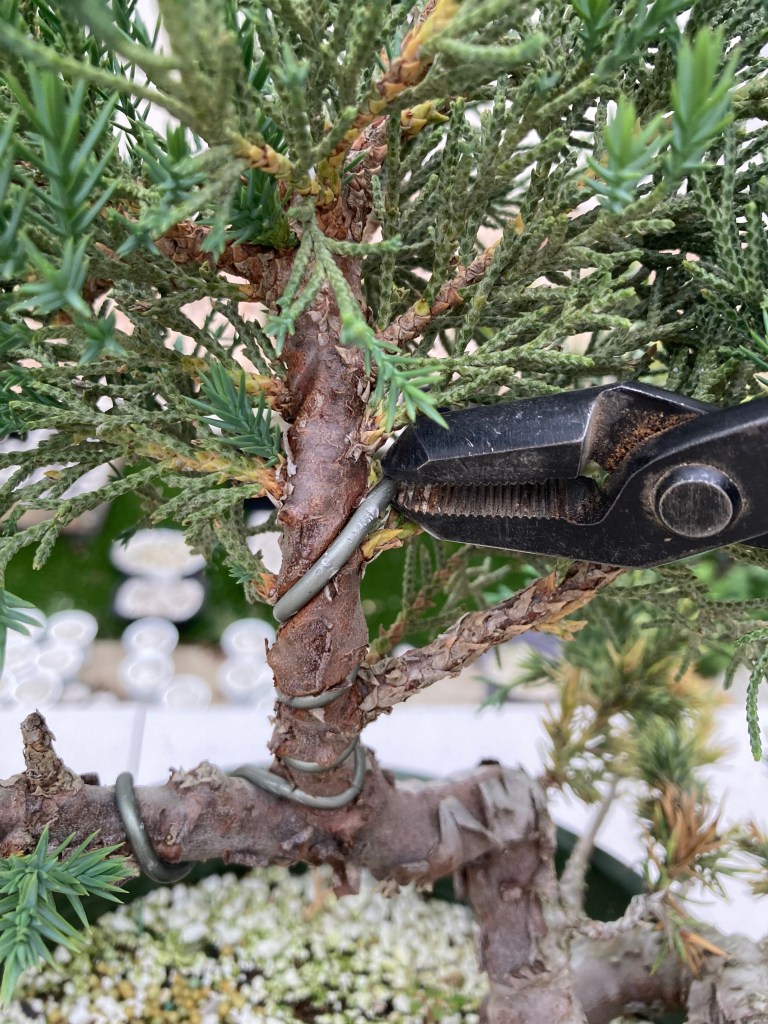
Lift each section straight off the surface of the branch, following the same angle the wire was running — not yanking sideways or dragging along the branch axis. If the wire was spiraling at a 45-degree angle, each section should come off in that same 45-degree direction, perpendicular to the branch surface. Pulling across the grain tears more bark than necessary. Work one section at a time and take your time.
What Happens to Wire Marks
Wire marks are discouraging, but they’re not always permanent. Young trees in good health will often push them out over several growing seasons as fresh bark layers build up and fill in the scarred area.
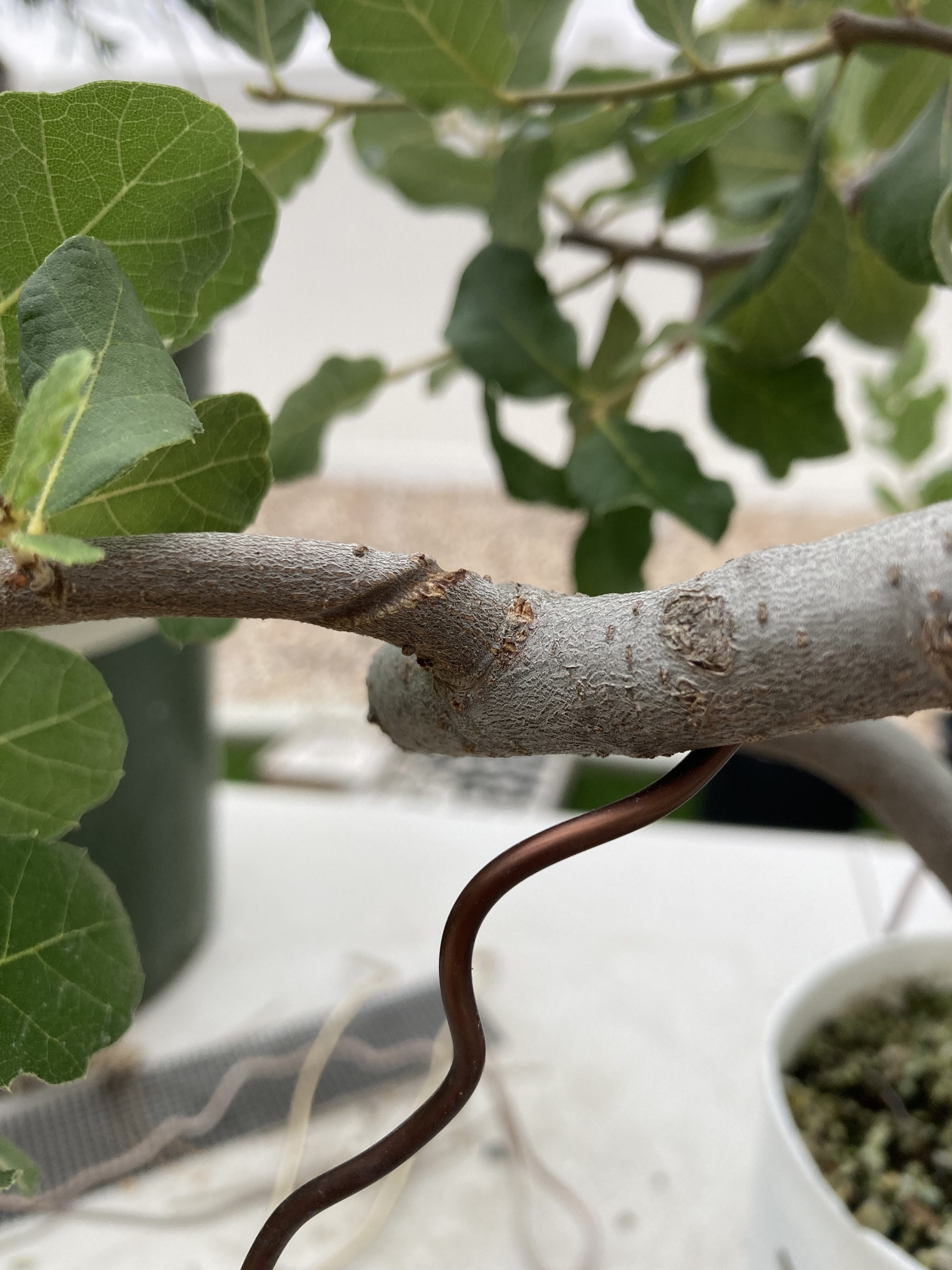
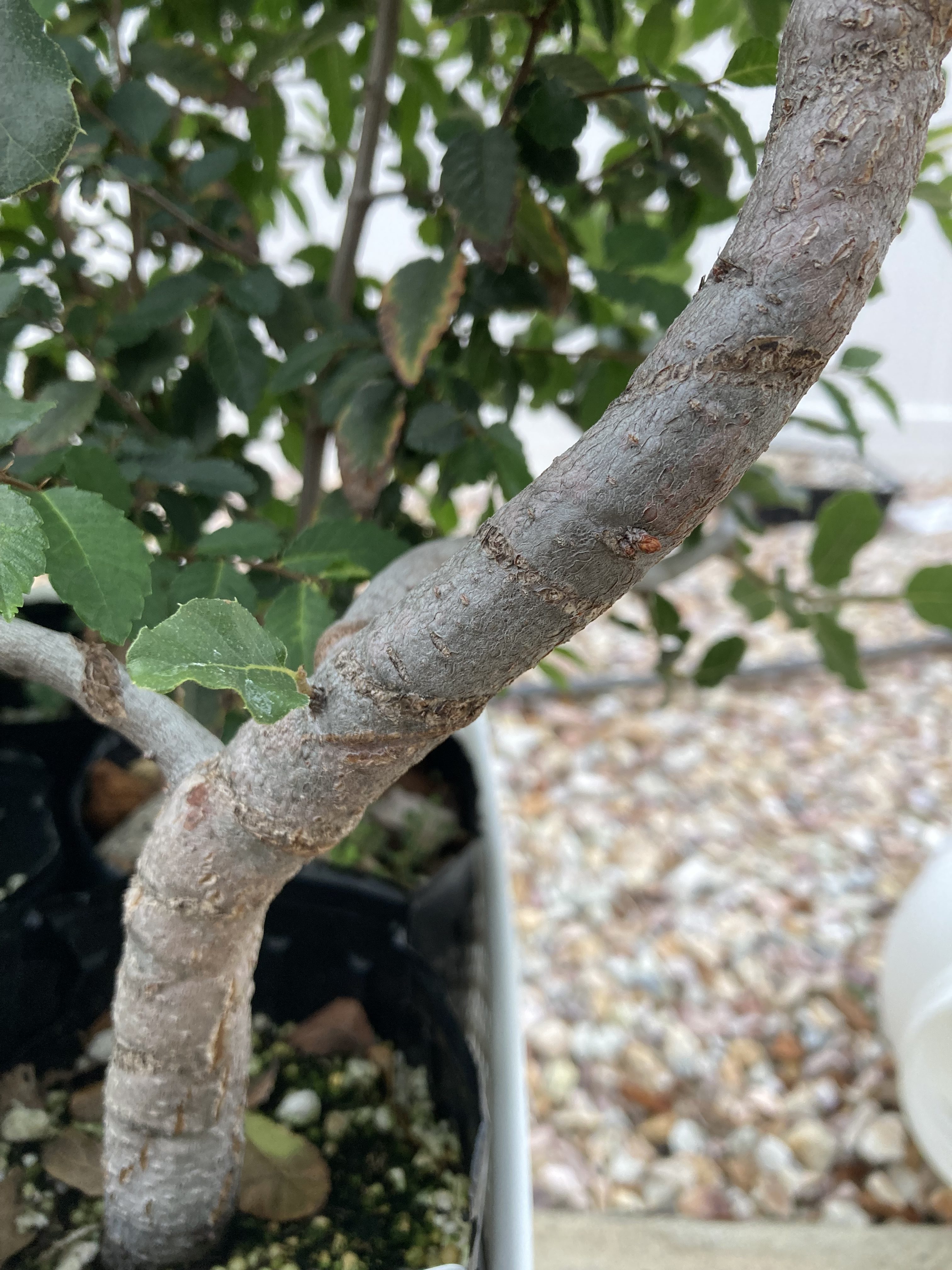
The degree of visible scarring depends a great deal on the species. Japanese maple is one of the most sensitive: its bark is thin and smooth, and spiral marks stand out clearly and can persist for years. If you work with Japanese maples, check them frequently during the growing season and pull wire early rather than late.
Japanese black pine tells a different story. Its rough, furrowed bark develops character from surface texture, and many practitioners intentionally leave wire on black pines as part of their development. The bark thickens around the wire, creating an interesting, gnarled surface that reads as age. For this species, wire marks aren’t necessarily a mistake — they can be a deliberate part of the tree’s design.
For most other species, some level of permanent scarring will remain if wire has bitten deep. With time, this often reads as character rather than damage, particularly on older trunk wood where rough texture adds to the appearance of age.
The Two Tools You Need
Wire removal comes down to two tools: a bonsai wire cutter and a pair of wire pliers. The cutter handles the cutting; the pliers give you a firm grip on individual sections to lift them free cleanly, especially when a section has started to embed. Having both on hand before you start makes the process faster and reduces the risk of accidentally tearing bark while improvising.
Browse tools at Morgan’s Bonsai for wire cutters, jin pliers, and the full range of hand tools for bonsai work.

Leave a Reply