
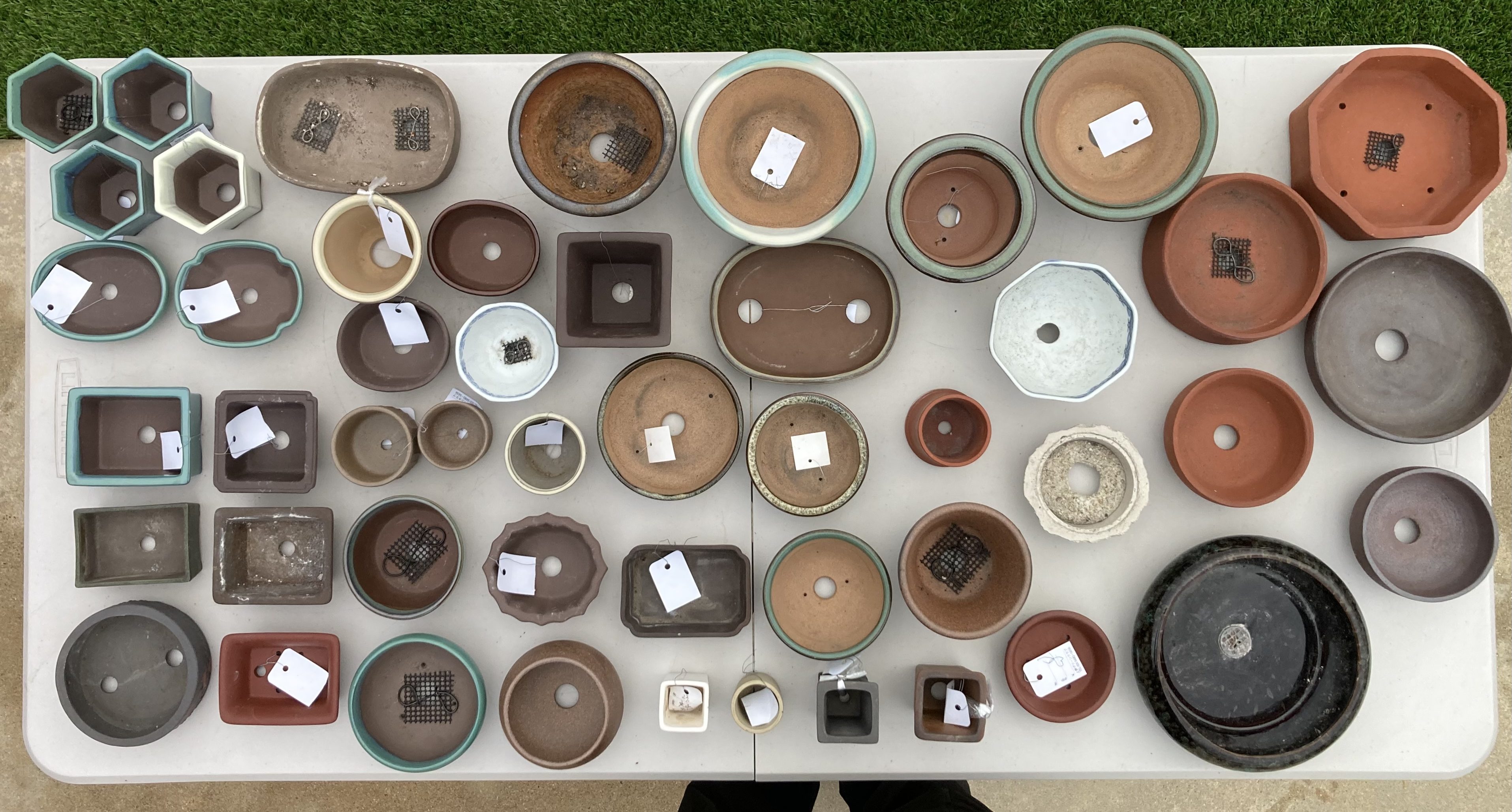
The pot is not just a container — it’s part of the composition. In bonsai, the relationship between tree and pot is a considered aesthetic choice, and a well-matched pot elevates a tree significantly. A poor match can undermine even a well-developed tree. Choosing the right pot isn’t complicated once you understand the basic principles, and those principles apply regardless of the species or style you’re working with.
Size: The Most Important Factor
Getting the size right matters for both aesthetics and the health of the tree. A pot that’s too large holds excess soil that stays wet between waterings, which can lead to root problems. A pot that’s too small doesn’t provide enough root volume for healthy growth.
Two guidelines are widely used in bonsai for sizing pots:
- For upright styles, the length of the pot is typically about two-thirds the height of the tree
- For wider, more spreading trees, the length of the pot is typically about two-thirds the width of the canopy
The depth of the pot is usually roughly equal to the diameter of the trunk at the base — sometimes slightly more for taller, more upright trees; shallower for wide, spreading designs.
These are guidelines, not rules. Experienced practitioners often deviate intentionally for aesthetic effect. For beginners, they’re a reliable starting point.
Shape: Match the Tree’s Character
Pot shape should complement the character of the tree. The broad conventions in bonsai are:
- Rectangular and oval pots suit most upright trees and formal styles. They provide a stable, grounded visual base.
- Round pots often suit trees with softer, more informal character — flowering trees, dome-shaped deciduous trees
- Deep cascade pots are used specifically for cascade and semi-cascade styles, where the trunk and branches grow downward over the pot’s edge and need the visual depth to balance
- Square pots are less common and typically suit very formal, symmetrical designs
Glazed vs. Unglazed
The choice between glazed and unglazed pottery is both aesthetic and practical.
Unglazed pots are the traditional choice for conifers — pines, junipers, and similar species. The earthy, natural tones of unglazed clay complement the rugged character of these trees. Unglazed pots also breathe slightly through the walls, which some practitioners feel benefits root health, though the effect is modest in practice.
Glazed pots offer more options in color and finish and are commonly used for deciduous trees, flowering trees, and fruiting trees. A colored glaze can complement the tree’s flowers, fruit, or autumn foliage. For a Japanese maple with vivid autumn color, an understated blue or dark pot creates a pleasing contrast. For flowering plum or cherry, a lighter glaze can echo the blooms.
The general principle is that the pot should complement the tree without competing with it. Subtle, muted colors work better than loud ones in most cases.
Drainage Holes
Any pot used for bonsai must have drainage holes. This is non-negotiable. Bonsai roots cannot sit in standing water, and a pot without adequate drainage will lead to root rot regardless of how carefully you water. Most purpose-made bonsai pots have one or more drainage holes in the base, often with a flat rim around the hole that allows drainage mesh to be tied in place.
Training Pots vs. Display Pots
It’s worth understanding the distinction between training pots and display pots. A training pot is used during the development phase of a tree — it’s typically larger, often plastic or unglazed, and prioritizes root development over aesthetics. A display pot is the pot you use once the tree has reached a stage of refinement worth presenting. Most trees in active development are better served by a simple training container.
When a tree is ready for a display pot, choosing well is worth taking time over. The right pot is a long-term investment — quality Japanese pots last for decades and become part of the tree’s history.
Find the Right Pot
Browse the pot collection at Morgan’s Bonsai — a range of Japanese-made pots in glazed and unglazed finishes, in sizes suited to most bonsai. If you’re not sure which pot suits your tree, consider the guidelines above and when in doubt, choose something simple and understated. The tree should be what you notice first.
Leave a Reply